The Vedic Period is one of the most important chapters in Indian history. Spanning nearly 1500 BCE to 500 BCE, it shaped religion, culture, and knowledge in South Asia. This age began with the arrival of the Aryans and is mainly understood through the Rigveda hymns, which provide rich details about early traditions.
Scholars often divide it into the Early Vedic period and the Later Vedic period, each with distinct developments in society, politics, and religion. The Vedic civilization timeline shows a shift from a simple pastoral life to more advanced agriculture and governance. The Vedic Period laid the foundation of Hinduism, education, and philosophy that still influences the world today.
Historical Background and Timeframe
When did the Vedic period start and end? Historians divide it into two main phases: the Early Vedic period (1500–1000 BCE) and the Later Vedic period (1000–500 BCE). These dates are approximate, based on both textual and archaeological evidence.
The most debated subject is the Aryan migration. Some scholars believe Indo-Aryan groups moved into the region, bringing with them Rigveda hymns and oral traditions. Others argue for indigenous development. Either way, this age reflects a dynamic cultural shift in the subcontinent.
Early vs. Later Vedic Periods
| Aspect | Early Vedic Period | Later Vedic Period |
| Economy | Pastoral economy, cattle wealth | Agriculture in the Vedic age, iron ploughs |
| Politics | Tribal chiefs, simple rule | Strong monarchies, the expansion of kingdoms |
| Society | Flexible Vedic society structure | Rigid Varna system origins |
| Religion | Nature gods, rituals | Rise of Upanishad Philosophy |
Sources of Information about the Vedic Age
Sources of the history of the Vedic period mainly come from the Vedic literature and scriptures. These include the four Vedas—Rigveda, Samaveda, Yajurveda, and Atharvaveda. Each text provides insights into rituals, philosophy, and social norms.
Besides texts, archaeological findings like pottery, tools, and burial sites give context. Commentaries such as the Brahmanas and Aranyakas explain rituals, while the Upanishads’ philosophy shifts focus toward spirituality. Oral tradition kept these works alive for centuries before they were written down.
Vedic Texts as Historical Sources
The Rigveda hymns are the earliest, praising Vedic deities (Indra, Agni, Varuna, Soma). Later texts reveal changes in society, rituals, and thought, giving us a full picture of the age.
Political Structure and Governance in Vedic Society
How was society organized in the Vedic period? Politics centered on tribal units led by chiefs or Rajans. They were supported by priests and warriors. Two popular assemblies, the Sabha and Samiti, acted as early democratic forums where decisions were debated.
The role of kings and assemblies in Vedic politics was crucial. The Raja was a protector, not an absolute monarch, in the Early phase. In the Later period, power grew more centralized as larger kingdoms emerged. This shift shows the evolution from tribal rule to monarchies.
Law and Justice System
Justice was based on dharma. Elders and priests played an active role in resolving disputes. Punishments were mild compared to later eras, focusing on maintaining order within clans.
Social Life and Caste System during the Vedic Period
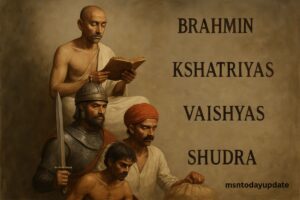
The Vedic society structure was family-based, with clans forming the core of life. Initially, social classes were fluid. But over time, the Varna system origins hardened into four groups—Brahmins, Kshatriyas, Vaishyas, and Shudras.
The role of women in the Vedic age was more significant in the Early period. Women could attend assemblies, perform rituals, and even compose hymns. In the Later phase, their status declined as rituals and patriarchal customs grew stronger.
Cultural Norms and Traditions
Festivals honored nature and gods. Clothing was simple, often woven from wool and cotton. Food included grains, milk, and meat, though vegetarianism spread later.
Religion, Rituals, and Early Philosophy
Religious practices during the Vedic age centered on yajnas and rituals. Fire worship was sacred, with offerings made to gods like Indra, Agni, Varuna, and Soma. These Vedic deities were believed to control natural forces.
Over time, philosophical reflection emerged. The Upanishads’ philosophy moved focus from rituals to questions of existence, soul, and ultimate reality. This shift influenced the transition from Vedic religion to Jainism and Buddhism, showing the richness of Indian thought.
Spiritual Evolution
While Brahmanas and Aranyakas emphasized ritual meanings, the Upanishads spoke of unity between the self (Atman) and the universal spirit (Brahman). This laid the foundation for later Hinduism.
Economic Activities and Occupations in the Vedic Era
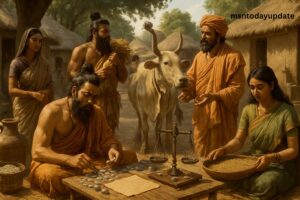
What were the main occupations in the Vedic period? Early society lived by cattle herding, showing a pastoral economy. Cows were seen as wealth and used in rituals, trade, and daily food.
With the use in the Later Vedic period, farming expanded. Agriculture became central, with rice, wheat, and barley as staples. Crafts, weaving, and trade also grew, creating a diverse economic base.
Trade and Exchange
The barter system was common, though some forms of coins appeared later. Villages exchanged goods like grains, metals, and ornaments, linking communities together.
Literature, Education, and Knowledge Systems
The education system in the Vedic period was oral. Knowledge was passed on in Gurukuls, where students lived with teachers. Subjects included grammar, astronomy, and mathematics.
The Sanskrit language origins shaped literature deeply. Works like the Brahmanas, Aranyakas, and Upanishads show evolving thought. The emphasis was not just on learning rituals but also on critical inquiry and philosophy.
Development of Sanskrit
Sanskrit became the language of scholarship. It preserved the contribution of the Vedas to Indian culture, influencing later literature and religious traditions across Asia.
Art, Music, and Cultural Expressions of the Vedic Period
Art in this age was simple but meaningful. Pottery, symbols, and ritual items reflect daily life. Dance and music had spiritual roles, often tied to ceremonies.
The Samaveda preserved chants, showing how music evolved into classical traditions. Poetry in the Rigveda hymns celebrated gods, nature, and human values, leaving a timeless cultural imprint.
Role of Music in Vedic Life
Songs and chants were not for entertainment alone but for devotion. This connection between music and ritual became a foundation for Indian classical music.
Transition from Vedic to Later Vedic and Epic Age
The shift from the Early Vedic period to the Later Vedic period saw new changes. Politics became centralized, agriculture expanded, and iron tools transformed farming. Social divisions grew sharper with the rigid Varna system.
This period also set the stage for the epics Ramayana and Mahabharata. The decline of the Vedic period led to the rise of new philosophies, paving the way for Jainism, Buddhism, and classical Hinduism.
Legacy and Lasting Significance of the Vedic Civilization
The impact of Vedic philosophy on Indian civilization is enormous. Ideas from the Upanishads, philosophy, yoga, and Ayurveda influence the world today. The legacy of Vedic civilization extends beyond religion—it shaped language, law, and culture.
For modern audiences, the significance of the Rigveda in history lies in its timeless wisdom. The Vedic civilization timeline is not just ancient history—it is the root of traditions still alive in daily Indian life and admired globally.
Conclusion
The Vedic Period was more than just an ancient chapter; it was the seed of India’s cultural identity. From Vedic deities to Upanishad philosophy, from yajnas and rituals to the education system in the Vedic period, it shaped everything that followed.
The legacy of Vedic civilization continues to inspire philosophy, spirituality, and science. By studying it, we understand not only Indian heritage but also how human thought has developed across time.
FAQs
When was the Vedic period?
The Vedic period lasted roughly from 1500 BCE to 500 BCE, covering the Early and Later Vedic phases.
Who was the founder of the Vedic period?
There was no single founder; the Aryans in the Vedic age laid its foundations through migration and settlement.
What are the 4 stages of life in the later Vedic period?
The four stages, called Ashramas, were Brahmacharya (student), Grihastha (householder), Vanaprastha (forest-dweller), and Sannyasa (renunciate).
What are the 4 Vedas in the Vedic period?
The four Vedas are the Rigveda, Samaveda, Yajurveda, and Atharvaveda, each with unique hymns and rituals.
Who wrote the Vedas first?
The Vedas were not written initially; they were passed orally by sages before being compiled in Sanskrit centuries later.